What does balance look like within the Church? We believe that God designed everything to operate in unison with critical representation of all elements of His design. Therefore, when we exclude the bits and pieces that we don’t like or have theological language for, we craft an incomplete picture of God, the Gospel, and by extension, the Church. Is it any wonder that culture has a harder and harder time valuing and respecting the Church? How far, and in how many ways, have we deviated from God’s design?
We invite you to consider how the Christian community and the Church experience could impact more lives if it followed this kind of model.
Modes of Administration
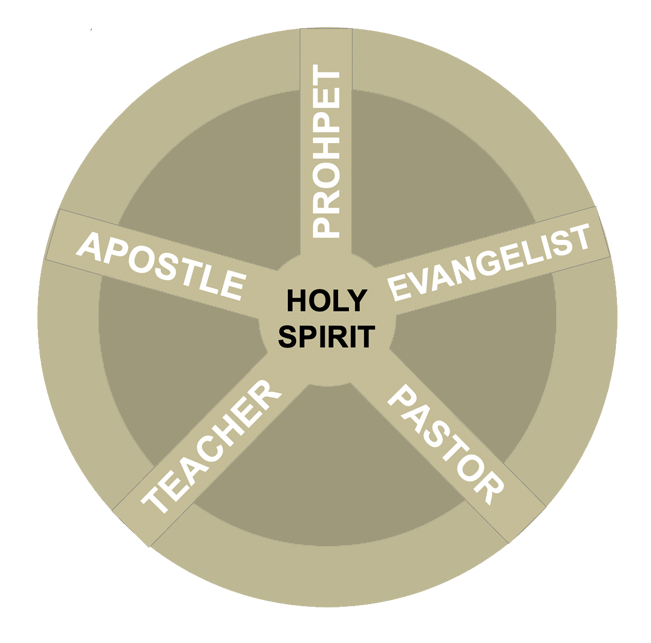
Ephesians 4:11 lays out the basic roles for the administration of the community of Christ-followers known nowadays as the Church. These are the foundational roles that were designed to equip and develop Christians into a state of maturity that is characterized by unity, knowledge of the Son of God, and a a reflection of the character modeled by Jesus Himself.
“But to each one of us grace was given according to the measure of Christ’s gift…And He gave some as apostles, some as prophets, some as evangelists, some as pastors and teachers, for the equipping of the saints for the work of ministry, for the building up of the body of Christ; until we all attain to the unity of the faith, and of the knowledge of the Son of God, to a mature man, to the measure of the stature which belongs to the fullness of Christ. Ephesians 4: 7,11-13″
The Holy Spirit is at the very center of this equation; the Spirit of God is the hub that these roles revolve around in harmony and unison. Jesus Christ of Nazareth is absolutely the foundation that Christianity is built upon, but by God’s own design, Jesus is not the hub that kingdom work is driven by. Jesus Himself said, “But I tell you the truth, it is to your advantage that I go away; for if I do not go away, the Helper will not come to you; but if I go, I will send Him to you…when He, the Spirit of truth, comes, He will guide you into all the truth; for He will not speak on His own initiative, but whatever He hears, He will speak; and He will disclose to you what is to come. John 16:7,13)”
It could be argued that the mission has been accomplished regarding the knowledge of the Son of God, as so many denominations value teaching and theology and make it a priority within their practice. But we dismally miss the mark when it comes to building unity and developing our reflection of the character and lifestyle of Jesus.
Until these are accomplished, the 5 roles mentioned in Ephesians 4:11 are still as relevant today as they were 2000 years ago. Does your church leadership represent a balance of these roles operating in unison–or like so many out there, does it emphasize the teacher or the evangelist as the role model that all Christians should model? When we disproportionately emphasize one role over the others, we function like a wheel with only one spoke–it is nearly impossible to have it move forward smoothly and be steered correctly due to it being so out of balance.
For these 5 roles–apostle, prophet, evangelist, pastor, and teacher–to effectively lead God’s people where He intends, the leaders must listen to the voice of the Holy Spirit who will disclose where the Father wants to lead His people. If we leaders do not listen for–and obey–the leading of the Holy Spirit (either out of ignorance, ego, or our own theological limitations) then at best we are leading out of human motive and agenda, assuming we know where God wants to take His people, what He wants to communicate with them, and what He wants to invite them into.
These 5 roles are ideally modeling what maturity and ministry look like in their own regard, with that modeling/discipling building two types of community: 1. Tribe: a community of Evangelists growing together in maturity, support and encouragement, developing a flow of up and coming evangelists learning how to operate with the Holy Spirit under the oversight of more mature brothers and sisters of their tribe (and the same goes for each of the 5 roles). 2. Ministry teams assembled from each successive layer of maturing believers: an apostle, a prophet, evangelist, pastor, and a teacher assembled into a team that seeks the Lord together for the ministry opportunity He wants them to step into.
Modes of Operation
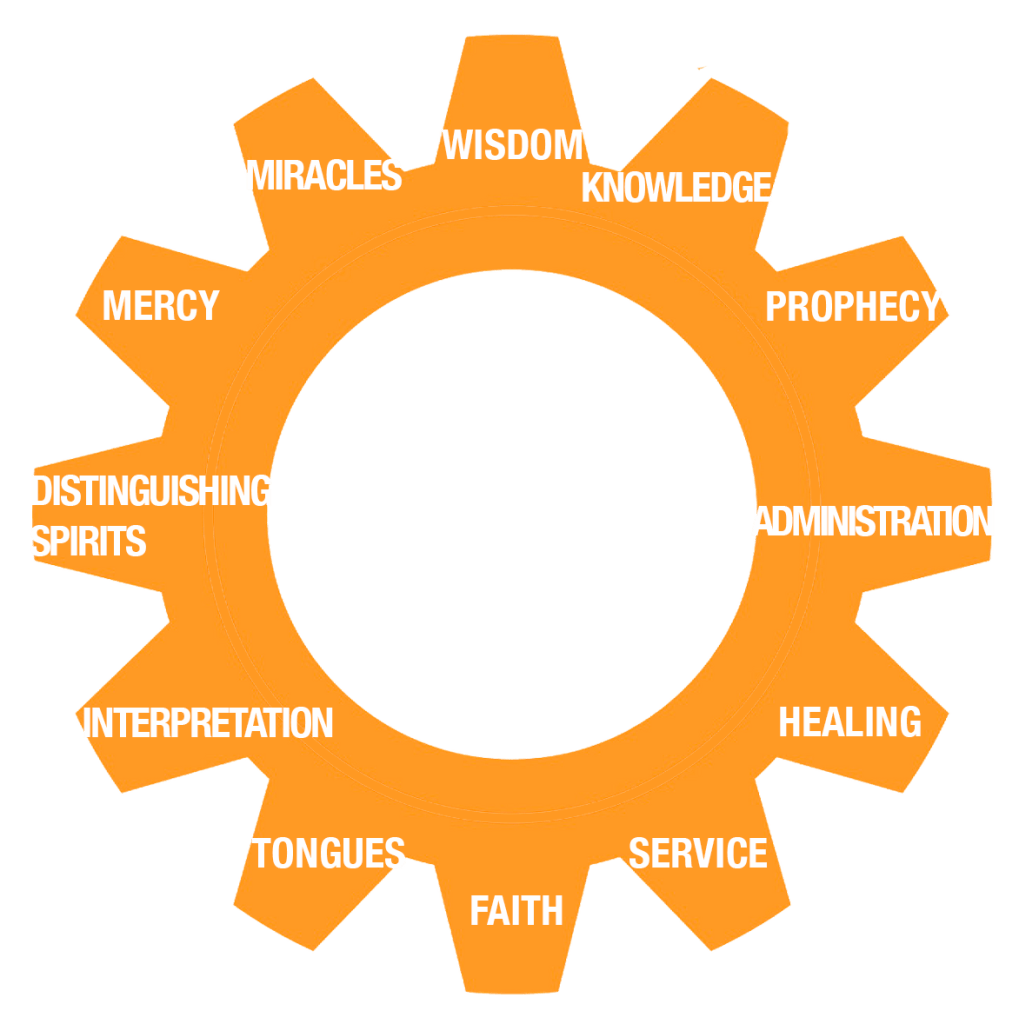
If the roles of Ephesians 4:11 are the positions needing representation in the Church, then the gifts of the Spirit become the expression of those roles. Many times denominations are formed and orient around a specific type of gift: for some, knowledge; for others, faith; and for others, healing, and so on. In many of these church settings, their preferred gift of the Spirit becomes the one “tool” that is awkwardly utilized to address every need that arises.
There is a quote that is summarized as this: “When you are a hammer, everything becomes a nail.” It doesn’t take much imagination to realize the problem in trying to bring healing using the gift of Service, or feeding the hungry relying on a gift of Interpretations, or tending to the brokenhearted utilizing a word of Knowledge. God designed this vast array of gifts in order to spread the burden of caring for people, but also to create a specialty for each one of His children to operate within. When we value and responsibly model all the gifts, everyone has a seat at the table.
Modes of Worship
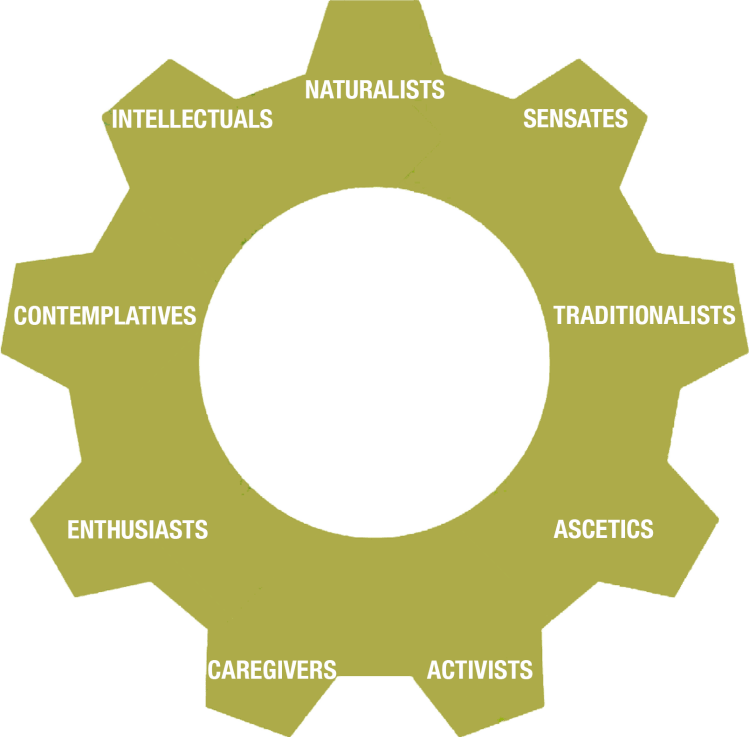
The Church in all its historical forms around the world has represented some combination of the many modes of worship we were designed to experience. In fact, it could rightly be said that modern denominations are often divided by the differences in worship style, as people of a particular preference flock together. Unfortunately, what should be understood as a beautiful kaleidoscope of worship styles is often vilified by one party or another. These are the modes of worship as researched and documented by author Gary Thomas in Sacred Pathways:
- Naturalists (Fransiscan monks, Cistercian farmer/monks)
- Sensates (Orthodox worship services with incense, icons, etc)
- Traditionalists (Syriac Orthodox using the Liturgy of St. James weekly for 2000 years)
- Ascetics (Mennonites, Desert Fathers)
- Activists
- Caregivers
- Enthusiasts
- Contemplatives (Church Father Origen)
- Intellectuals (Reformed Presbyterians, Church Father Tertullian)
It would appear that the modern Protestant Church primarily values Intellectualism, the Roman Catholic Church values Traditionalism, and the Orthodox Churches value Contemplative and Sensate styles.
Ideally, however, a local church would facilitate multiple ways throughout the calendar for its people to experience poignant worship encounters with God in their own heart language, and in doing so, congregants would have a greater sense of connection with God through the church, not in spite of it.
Modes of Outpouring
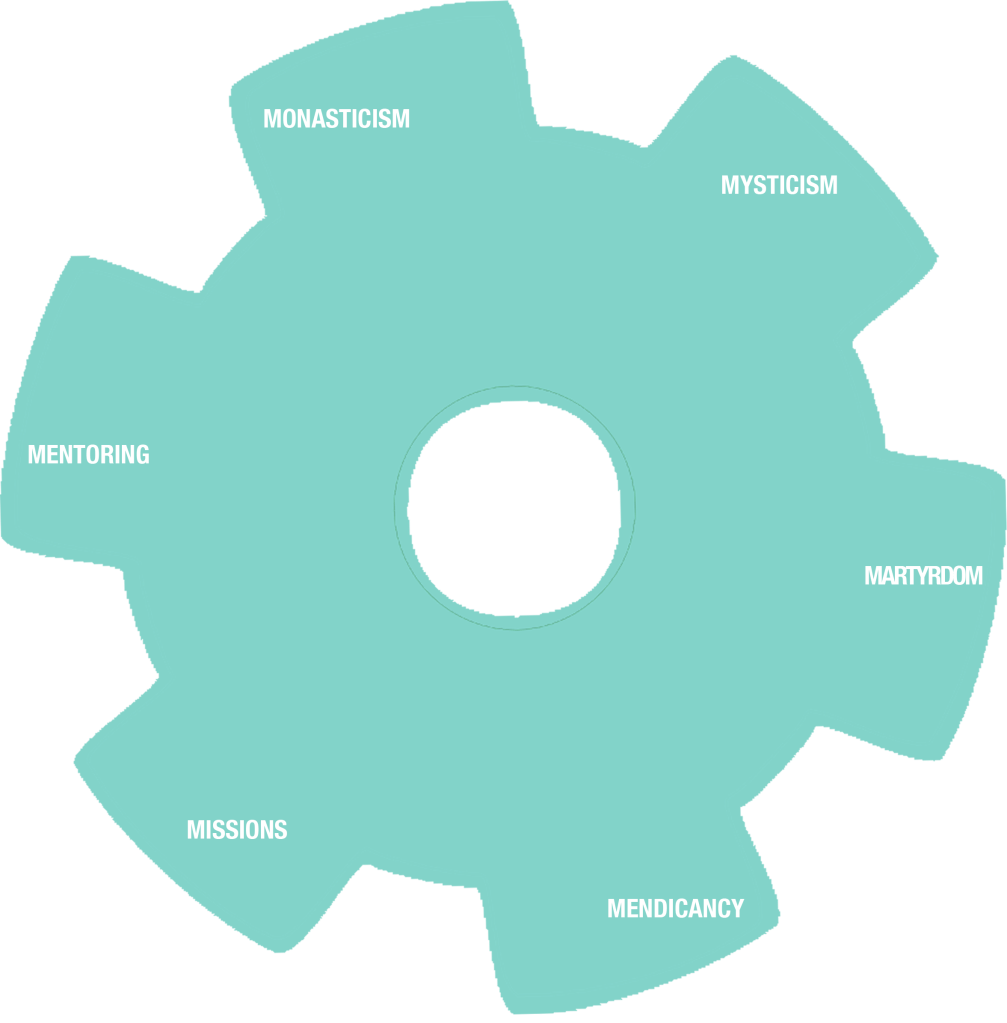
Historically there have been many modes of outpouring/outreach, ranging from evangelistic to pastoral to sacrificial lifestyles. Each mode represented here has a rich history within the Church, with certain modes being the focus of a particular era. For example, the third century was a time of enormous martyrdom, as was the 16th century. The first, second, third and twentieth centuries were periods of high mission outreach. Regardless of what era we find ourselves in, the Church’s role is to pour out into the lives of others, whether intellectually, emotionally, or physically.
Modes of Engagement
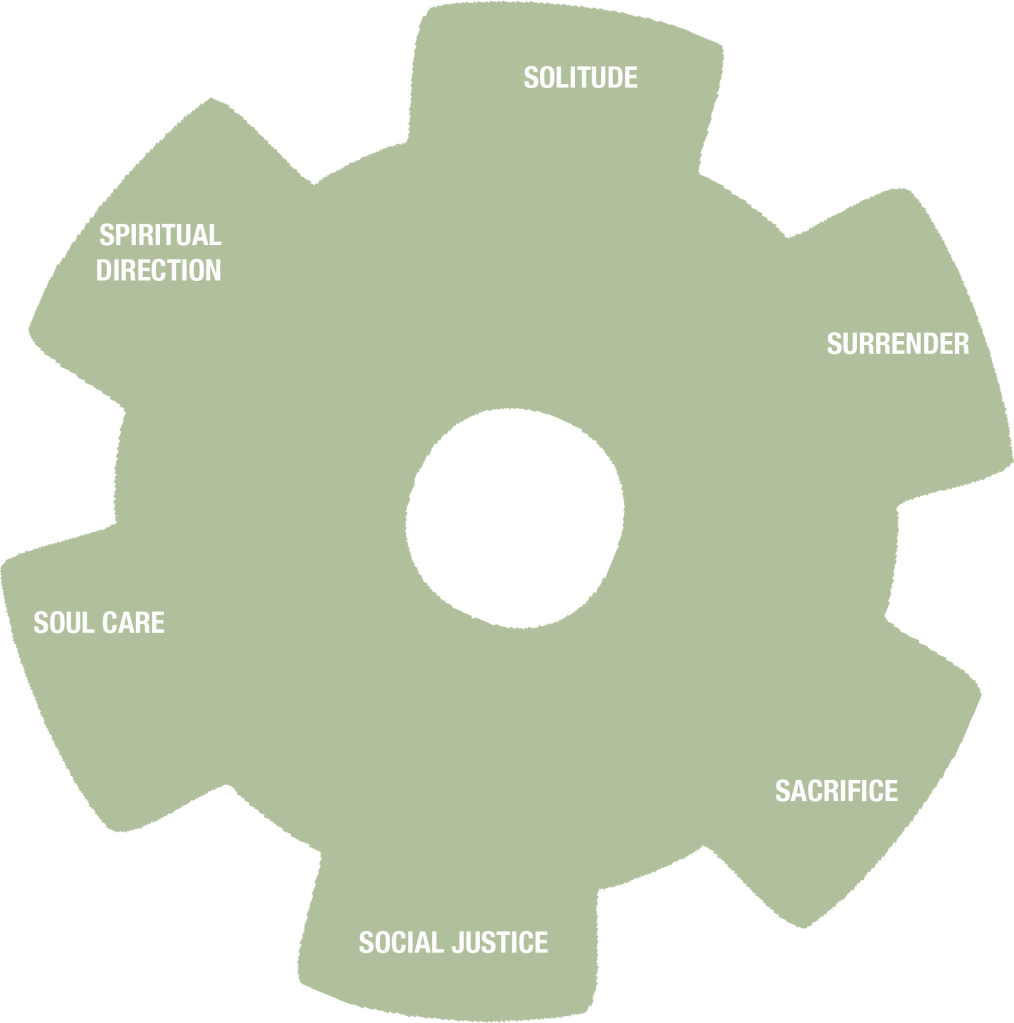
Action is the hallmark of Jesus’s followers, and there are patterns to how this action has expressed itself over time. Despite our tendency to silo ourselves nowadays and be convinced of the importance of our own preferences, there has always been a balance to the activity of our brothers and sisters throughout Church history. They took action to defend the weak and oppressed; they joined the brokenhearted in their sorrow to shoulder the burden; they offered hope and direction through wisdom and through nurture; and some of them sacrificed themselves for the sake of the freedom that Jesus asked us to bring to the world.
A Balanced Approach
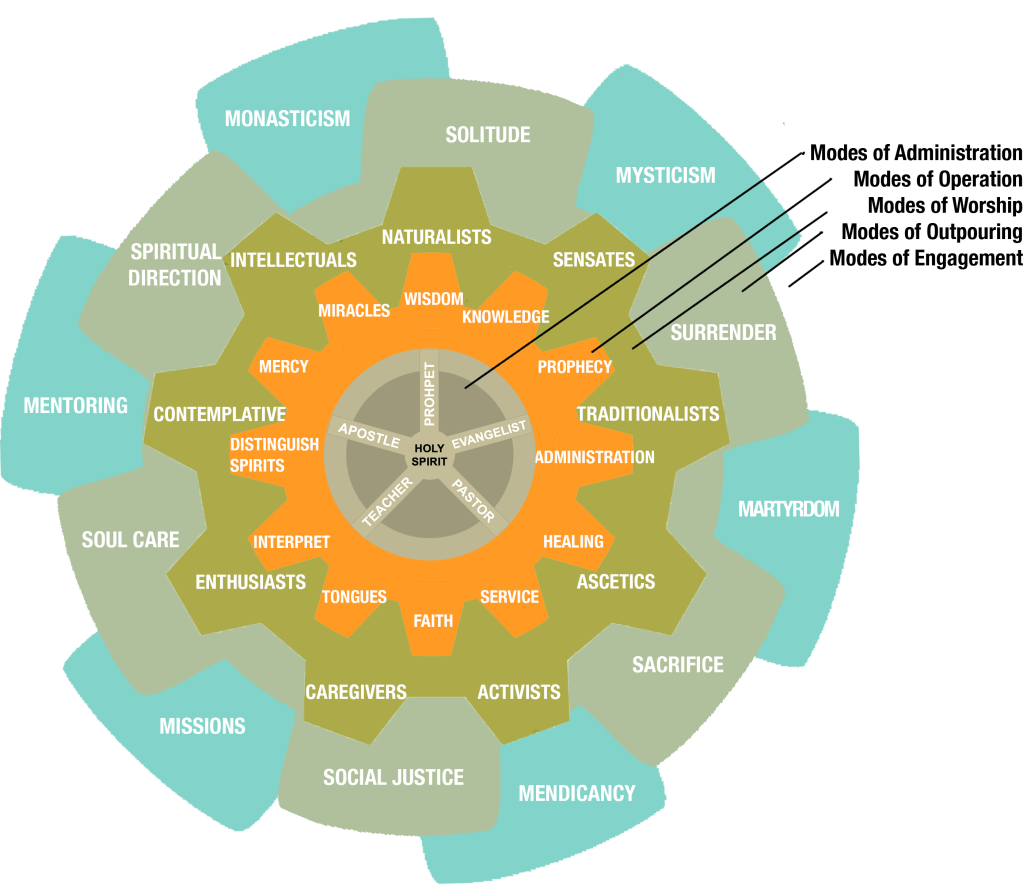
What we hope to have inspired within you the understanding of what balance can look like within the modern Church. We believe that God designed everything to operate in unison with critical representation of all elements of His design.
Will you join us in creating this balanced approach instead of “Church as usual”?


 neoOrthodoxy